The child must adapt
Learn every risk. Manage every setting. Carry the burden of protection.

The Internet should adapt to children.
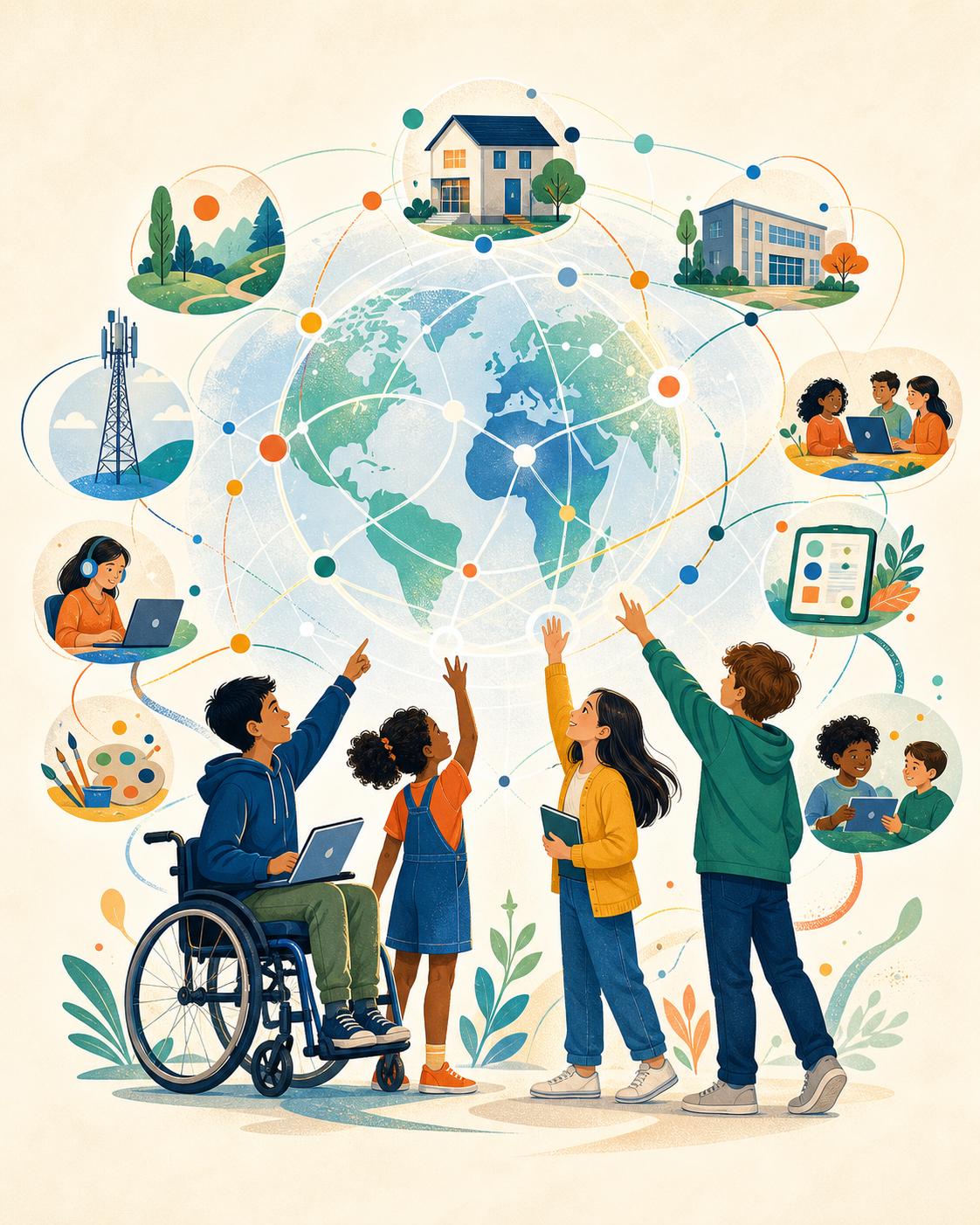
We are building a global movement for an Internet that recognises children’s developmental needs—and provides safer, age-appropriate and healthier digital experiences by design.
01 — The vision
Children now learn, connect, create and grow in digital environments built primarily for adults. The answer is not simply to teach every child to navigate every risk. It is to redesign the environment around their rights, needs and evolving capabilities.
Read the complete vision →Learn every risk. Manage every setting. Carry the burden of protection.
Networks and services respond with safer, healthier and age-appropriate experiences.
02 — A different approach
A healthier digital future starts with a new set of defaults—shared across policy, networks, education and digital services.

Safety should be built into the digital environment—not added after harm occurs.
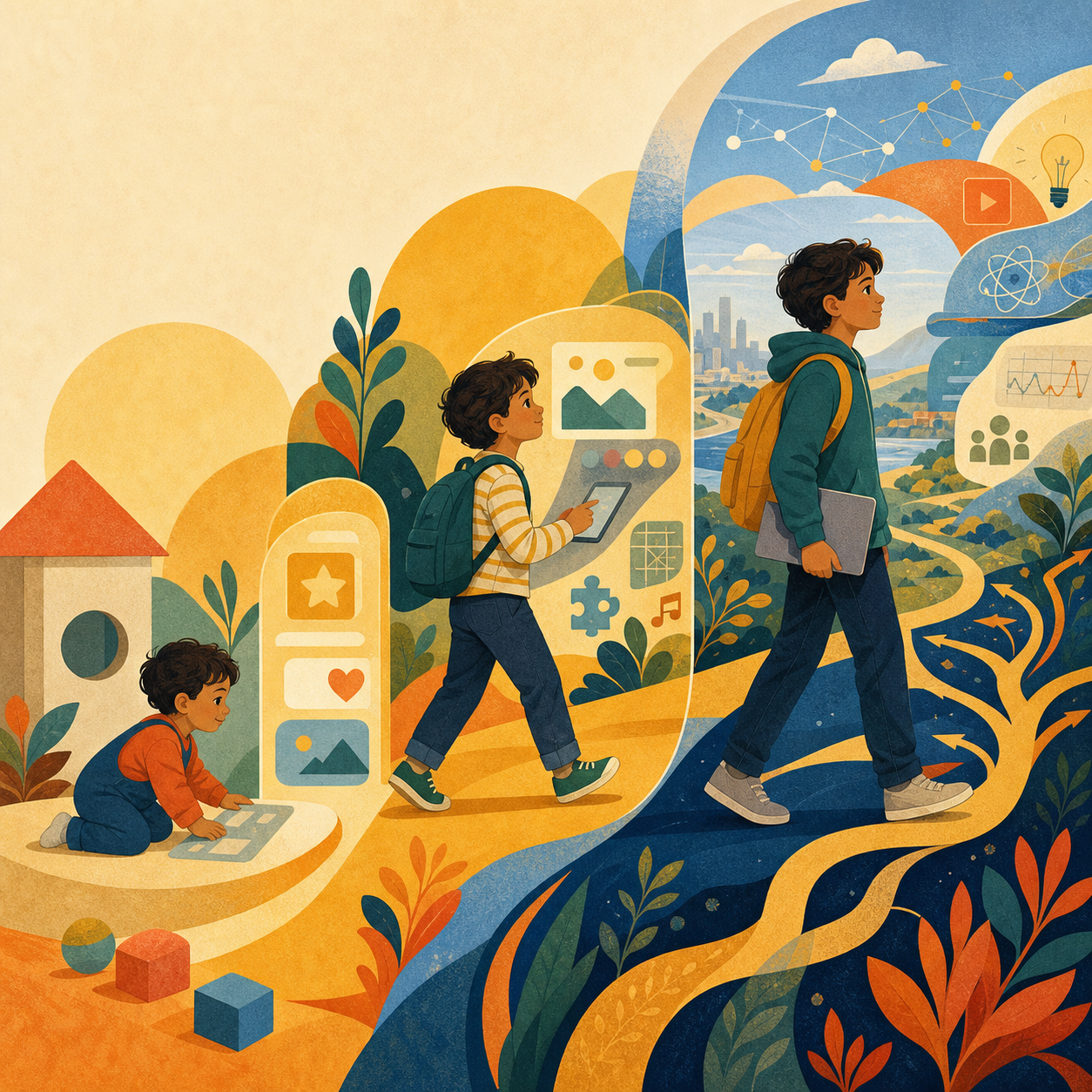
Digital experiences should respond to children’s evolving capabilities and needs.

Technology should support balance, agency and healthy development.

Protection should progressively give way to confidence and independence.
A familiar feeling. A different Internet.
What if the care we build into children’s everyday spaces shaped their digital world, too?
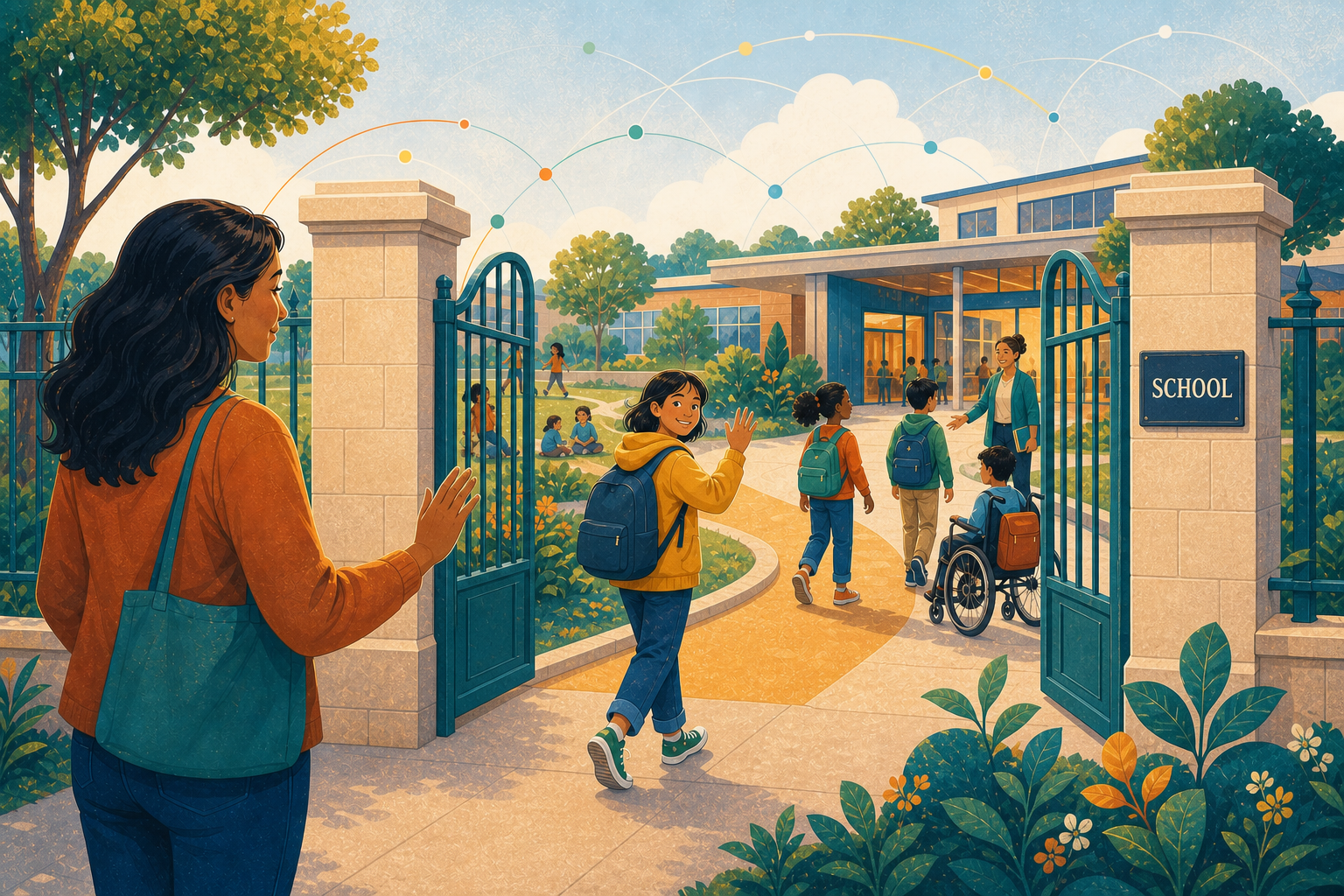
At the school gate, a parent can turn around. Not because they have stopped caring, but because the environment beyond it was designed for children.
Online, families are often asked to supervise an environment they did not design. A Child-Friendly Internet puts responsibility into the environment—not only on the family.
So a parent can turn around.
With confidence.
Designed-in safeguards support parents and caregivers. They do not eliminate every risk or replace their role.
A pathway, not a switch
A child-friendly Internet supports development over time—providing stronger safeguards early on, then progressively widening independence as capability grows.
Strong defaults and supported exploration create a safer first experience of the connected world.
Safeguards evolve as skills, judgement and confidence develop—not simply on a birthday.
Young people progressively gain control, understand consequences and participate on their own terms.
03 — How it can work
A privacy-preserving child-assurance signal can help networks and digital services deliver an appropriate experience—without unnecessarily revealing who a child is.
Connects through
Services respond
04 — From idea to ecosystem
A Child-Friendly Internet Nation aligns public policy, communications infrastructure, education and digital platforms around one shared commitment.
Policy & governance
Network continuity
Everyday support
Learning environments
Safe public access
Experiences that adapt
Policy & Global Updates
Selected developments in policy, regulation and evidence—examined through the principles of a Child-Friendly Internet.
View all updates →National decree, safe by design & platform accountability
Mexico published a federal decree on safe digital environments for children and adolescents on 14 October. It applies to digital platforms that enable people to interact, communicate, generate or share content, and requires measures intended to prevent children’s access, exposure or recommendation to specified harmful material.
Read our perspective →01Regulatory enforcement, generative AI & age assurance
Ofcom reports that its investigation identified circumstances in which age-gated pornographic material on X remained accessible to accounts that had not completed age assurance. X introduced changes so content labelled as pornography is restricted consistently for accounts without completed assurance. SpaceXAI also added UK restrictions affecting pornographic image generation, viewing, sharing and sexually explicit companion-chatbot conversations.
Read our perspective →02Curated from authoritative original sources. Publication follows editorial review and approval.
05 — Research & dialogue
The initiative is a platform for research, policy dialogue and practical demonstrations. We bring together child-rights thinking, public policy, network architecture, education and responsible technology design.
The Child-Friendly Internet Manifesto
“A child-friendly Internet is not a smaller version of the adult Internet. It is a digital environment designed to support childhood itself.”
Our growing movement
We are gathering the first international community behind this shared vision. Public statistics will appear soon.
Every confirmed supporter counts toward the movement, including those who choose to remain anonymous.
Join the movement
Bring your expertise, influence and imagination. Governments, operators, educators, technology companies, researchers and advocates all have a role.